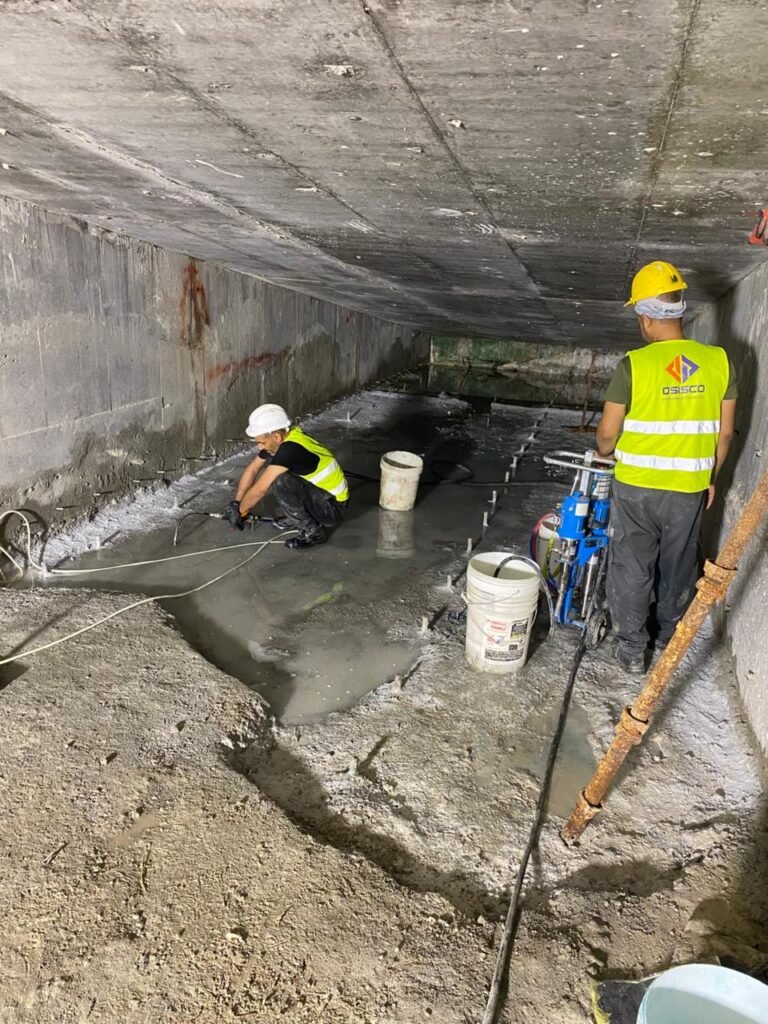
Concrete Injection Saudi Arabia: PU Injection, Sika Injection, Crack Injection & Water Leak Repair
Concrete Injection Saudi Arabia is one of the most important repair and waterproofing solutions for basements, tunnels, lift pits, water tanks, underground car parks, retaining walls, industrial facilities, and infrastructure projects across the Kingdom.
When water leakage appears in concrete, the source is often hidden inside cracks, construction joints, expansion joints, honeycombs, pipe penetrations, voids, or failed waterproofing membranes. Surface repair may hide the problem temporarily, but professional injection grouting targets the actual water path inside or behind the concrete structure.
OSISCO provides specialized concrete injection services in Saudi Arabia, including PU injection , Sika injection , crack injection , curtain injection , acrylic injection , epoxy injection , injection grouting , water leak repair , and underground waterproofing.
This guide explains the most important injection methods, how engineers should select the correct system, where Sika Injection 304, Sika Injection 306, and Sika Injection 307 are used, and why OSISCO is a trusted Saudi Arabia injection contractor for specialized projects.
.
Why Concrete Injection Is Important in Saudi Arabia
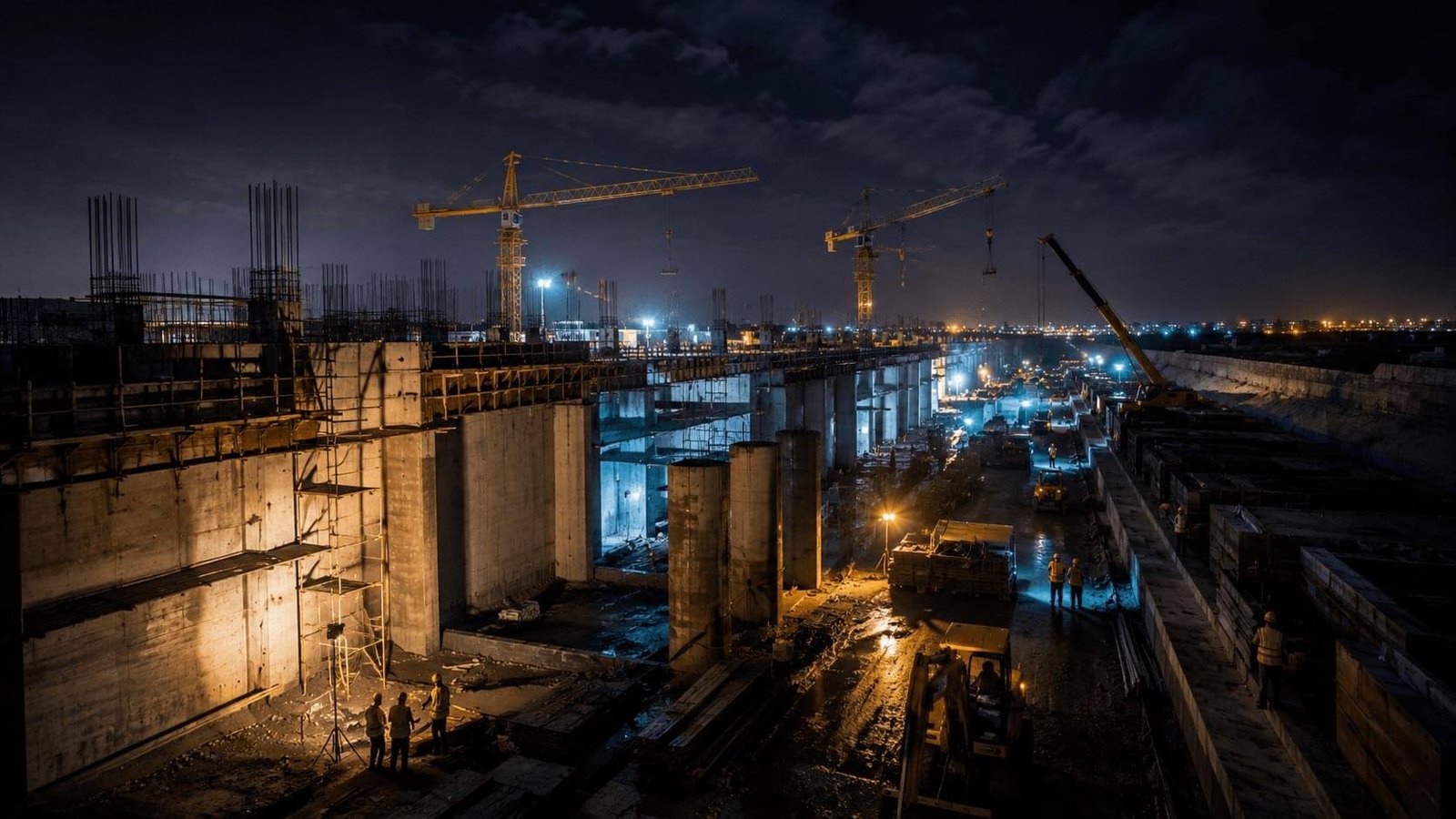
Saudi Arabia’s construction market includes deep basements, underground parking structures, tunnels, reservoirs, water tanks, sewage structures, industrial plants, commercial towers, and major infrastructure projects. These structures are often exposed to water pressure, concrete movement, thermal changes, construction joint defects, pipe penetrations, and failed waterproofing systems.
In many projects, water leakage appears after the structure is already built and operational. External excavation may be impossible, expensive, or disruptive. This is why concrete injection is one of the most practical repair methods for engineers, consultants, contractors, and facility managers.
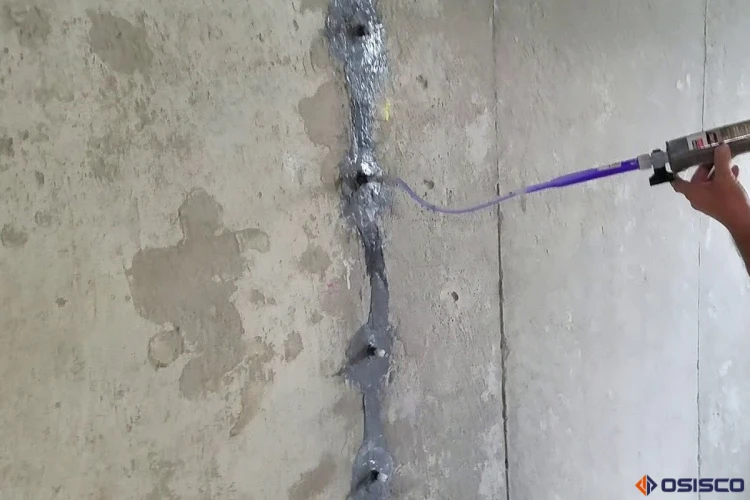
Concrete injection allows the repair team to treat the leakage path from the internal side of the structure. The selected injection resin or grout is pumped under controlled pressure into cracks, joints, voids, honeycombs, or behind the concrete. The goal is to seal the water path and restore watertightness with minimum demolition.
Concrete injection is commonly required for:
- Basement leak repair
- Lift pit waterproofing
- Tunnel leakage repair
- Water tank leakage repair
- Construction joint leakage
- Expansion joint leakage
- Retaining wall leakage
- Underground car park waterproofing
- Sewage and wastewater structure repair
- Industrial concrete repair
- Foundation and soil stabilization injection works
For Saudi Arabia projects, injection should not be treated as a simple site activity. It is a specialized waterproofing and concrete repair discipline that requires correct diagnosis, correct material selection, trained applicators, controlled injection pressure, and proper QA/QC documentation.
What Is Concrete Injection?
Concrete injection is a repair and waterproofing method used to seal water leakage, repair cracks, fill voids, stabilize weak zones, and improve the performance of concrete structures. It is performed using injection pumps, packers, injection hoses, and specialized materials selected according to the site condition.
Injection materials may include polyurethane resins, acrylic or polyacrylic resins, epoxy resins, microfine cement grouts, and cementitious grouting materials.
According to Sika’s official injection waterproofing resources, injection systems can be used to seal leaks, repair damaged structures, and make concrete structures watertight again using different injection technologies.
The correct injection product depends on several factors:
- Is the leak active or dry?
- Is the water pressure low, medium, or high?
- Is the crack structural or non-structural?
- Is movement expected after repair?
- Is the leakage from a crack, joint, penetration, honeycomb, or failed membrane?
- Is the repair objective waterproofing, structural bonding, or both?
- Is external access possible?
- Is the structure underground or water-retaining?
For example, a live water leak in a basement may require PU injection. A leaking joint or failed membrane may require acrylic injection or curtain injection. A dry structural crack may require epoxy injection. A leaking wall where external waterproofing has failed may require curtain injection behind the concrete.
Common Water Leakage Problems Solved by Injection
Active Water Leakage
Active water leakage occurs when water is visibly flowing through concrete cracks, joints, penetrations, honeycombs, or voids. This is common in basements, lift pits, underground parking areas, retaining walls, tunnels, and utility structures.
PU injection is often used to stop or control active leakage. In some cases, acrylic injection or staged injection may be required depending on water pressure, crack width, and the required final performance.
Concrete Crack Leakage
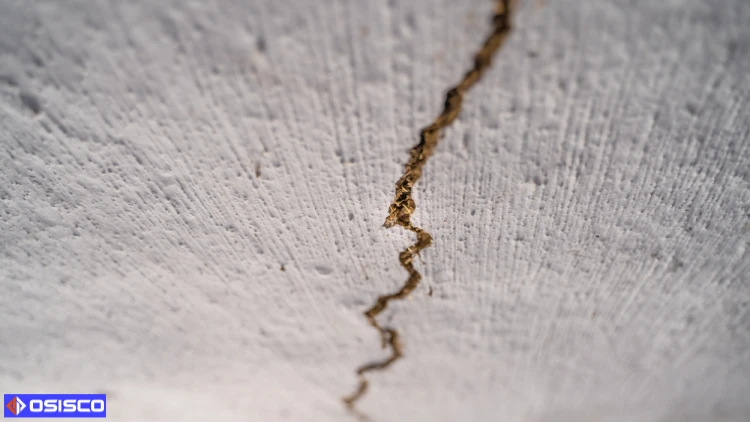
Concrete cracks may be caused by shrinkage, settlement, poor curing, thermal movement, loading, construction defects, or structural movement. Not every crack should be repaired with the same injection system.
A non-structural leaking crack may require flexible waterproofing injection. A structural crack may require epoxy injection after water is controlled. A moving crack may require an elastic resin that can accommodate limited movement.
Construction Joint Leakage
Construction joints are one of the most common leakage points in underground and water-retaining structures. Leakage may occur because of poor joint preparation, honeycombing, waterstop issues, movement, or concrete shrinkage.
Injection can seal the injection joint internally or through an injection hose system if the hose was installed during construction.
Expansion Joint Leakage
Expansion joints are designed to allow movement. Because of this, the injection material must be flexible. Rigid materials may fail if the joint continues to move.
Expansion joint leakage may require flexible resin injection, joint repair, waterstop treatment, or a combined waterproofing approach.
Pipe Penetration Leakage
Water leakage around MEP sleeves, pipes, and penetrations is common in basements, pump rooms, tanks, and underground technical rooms. Injection can seal voids around the penetration and stop water paths around the pipe.
Honeycomb and Void Leakage
Honeycombed concrete and voids can create hidden water channels. Injection can fill these channels and block water movement inside the concrete mass.
Failed External Waterproofing
When external waterproofing membranes fail after construction, it may be impossible to access the outside face of the structure. In this case, curtain injection can create a sealing barrier behind the concrete without full excavation.
7 Proven Concrete Injection Methods
1. PU Injection / Polyurethane Injection
PU injection is one of the most widely used methods for active water leak repair. It is commonly used when water is leaking through cracks, joints, voids, or honeycombed concrete.
Polyurethane injection materials can react with water and form a flexible watertight seal. Some PU systems are designed for rapid water stopping, while others are used for permanent flexible waterproofing.
PU injection is commonly used for:
- Active water leaks
- Basement waterproofing
- Lift pit leakage
- Tunnel leakage
- Retaining wall cracks
- Construction joints
- Pipe penetrations
- Underground car parks
- Water-bearing cracks and voids
An injection PU method is not always the correct solution for every case. If the objective is structural bonding, epoxy injection may be required. If the objective is curtain injection or very low viscosity penetration, acrylic or polyacrylic systems may be more suitable.
2. Acrylic / Polyacrylic Injection
Acrylic and polyacrylic injection systems are very low viscosity materials used for watertight sealing where deep penetration, flexibility, and controlled reaction time are required.
They are commonly used for:
- Curtain injection
- Construction joint leakage
- Expansion joint leakage
- Damaged waterproofing membrane repair
- Injection hose systems
- Fine cracks and water-bearing voids
- Damp or water-saturated ground conditions
- Underground waterproofing
Acrylic injection is especially useful when the water path is fine, distributed, or located behind the concrete structure.
3. Epoxy Injection
Epoxy injection is used for structural crack repair where the objective is to restore bonding and load transfer across a crack. It is usually selected for dry or controlled cracks, not uncontrolled active water flow.
Epoxy injection is commonly used for:
- Structural cracks
- Beams, slabs, columns, and walls
- Concrete strengthening works
- Bridges and industrial structures
- Crack bonding
- Concrete repair and rehabilitation
If water is actively leaking, the leak should usually be controlled first before epoxy injection is considered.
4. Curtain Injection
Curtain injection is used when water is entering from behind a concrete wall or slab and external excavation is not practical. The method involves drilling through the concrete and injecting resin into the soil, void, or interface behind the structure. The injected material forms a waterproof barrier on the outside face of the concrete.
Curtain injection is commonly used for:
- Deep basements
- Tunnels
- Underground car parks
- Retaining walls
- Water tanks
- Sewage structures
- Utility structures
- Failed external waterproofing systems
Curtain injection requires careful design, injection point layout, pressure control, and material selection.
5. Injection Hose Systems
Injection hose systems are installed in construction joints during the construction phase. If leakage occurs later, the hose can be injected with a suitable material to seal the joint.
Injection hoses are used in:
- Water-retaining structures
- Basements
- Tunnels
- Reservoirs
- Sewage treatment plants
- Retaining walls
- Construction joints requiring future maintenance access
6. Microfine Cement Injection
Microfine cement injection is used for non-flexible filling, selected crack filling, void filling, ground improvement, and soil stabilization applications. It is often used where cementitious compatibility or larger-volume filling is required.
Microfine cement injection may be suitable for:
- Soil stabilization
- Void filling
- Foundation improvement
- Masonry injection
- Non-moving cracks
- Grouting behind structures
- Selected tunnel and civil works
7. Structural Injection & Concrete Repair Injection
Structural injection combines diagnosis, epoxy or cementitious injection, and concrete repair methods to restore performance to damaged concrete elements.
It may be used together with concrete repair mortars, protective coatings, corrosion protection systems, carbon fiber strengthening, jacketing systems, and waterproofing systems.
Sika Injection Systems: 304, 306 & 307
Many engineers and contractors in Saudi Arabia search directly for Sika injection materials by product name. Sika Injection 304, Sika Injection 306, and Sika Injection 307 are important search terms for waterproofing injection and concrete leak sealing.
These products must be described accurately. Sika Injection 304, 306, and 307 are not general PU injection products and should not be presented as epoxy systems. They are polyacrylic / acrylate-based injection systems used for permanent watertight sealing and related waterproofing applications.
The final product selection must always follow the latest official Product Data Sheet, site condition, consultant approval, and approved method statement.
SikaInject®-304 DE / Sika Injection 304
SikaInject®-304 DE is a 3-component polyacrylic injection resin used for permanent watertight sealing. It has very low viscosity, adjustable pot life, high elongation, and is used for curtain injection and permanent waterproofing.
Typical applications include:
- Curtain injection
- Permanent waterproofing
- Cracks, joints, and honeycombs
- Civil engineering and tunneling works
- External sealing behind concrete
- Ground and sand injection
- Failed waterbar or expansion joint repair when used with the required compatible system
Sika® Injection-306
Sika® Injection-306 is a very low viscosity elastic polyacrylic injection resin used for permanent watertight sealing. It has adjustable curing time and remains permanently elastic, allowing it to absorb limited movement.
Typical applications include:
- Damaged waterproofing membrane repair
- Construction joint sealing
- Limited movement expansion joints
- Drainage pipe joint sealing
- SikaFuko injection hose systems
- Water-bearing cracks and voids
- Curtain injection in damp or water-saturated ground
Sika® Injection-307
Sika® Injection-307 is a very low viscosity elastic polyacrylic injection resin used for permanent watertight sealing. It is suitable for hot and tropical climatic conditions and can be used where flexibility, low viscosity, and watertight sealing are required.
Typical applications include:
- Crack injection
- Joint injection
- Water-bearing cracks and voids
- SikaFuko injection hose systems
- Construction joints
- Limited movement expansion joints
- Curtain injection
- Damaged waterproofing membrane repair
Important Note About PU and Epoxy Sika Systems
Sika also has polyurethane and epoxy injection products, but they are different from Sika Injection 304, 306, and 307.
- PU injection systems are used for flexible waterproofing and active leak sealing.
- Epoxy injection systems are used for structural crack bonding.
- Acrylic / polyacrylic systems are used for permanent watertight sealing, curtain injection, fine cracks, joints, and membrane repair.
OSISCO selects the system according to the leakage condition and project requirement, not only according to the product name.
Curtain Injection & Underground Waterproofing
Curtain injection is one of the most effective solutions for underground waterproofing when water is entering from behind the concrete structure and external access is not possible.
The process usually includes leak mapping, drilling through the concrete, installing injection packers, injecting acrylic or suitable resin behind the structure, creating a waterproof barrier at the soil-concrete interface, monitoring leakage reduction, and documenting injection points, pressure, and material consumption.
Curtain injection is highly technical because the injected material must reach the correct zone behind the structure. The success of the system depends on drilling angle, packer spacing, resin viscosity, reaction time, injection pressure, and site supervision.
Curtain injection is suitable for:
- Basement walls
- Underground car parks
- Retaining walls
- Tunnels
- Utility corridors
- Water tanks
- Sewage structures
- Failed external waterproofing membranes
Key Applications in Saudi Arabia
Basement Waterproofing
Basement leakage is one of the most common problems in commercial, residential, and mixed-use buildings. Leaks often appear at wall cracks, raft slabs, construction joints, tie-rod holes, pipe penetrations, and expansion joints.
Concrete injection can stop the leak without major demolition and without exposing the external waterproofing system.
Lift Pit Waterproofing
Lift pits are usually below ground level and exposed to water pressure. Since external access is normally impossible after construction, injection is one of the most practical solutions.
For lift pit waterproofing lift shaft areas require thorough inspection of typical leakage points, including wall-floor joints, cracks in pit walls, honeycombed concrete, pipe penetrations, construction joints, and defective waterproofing membrane zones.
Water Tank Leakage Repair
Water tanks require careful material selection because the repair system must consider water pressure, concrete condition, joint movement, and the type of stored water.
Injection can be used for wall cracks, floor-wall joints, construction joints, pipe penetrations, honeycomb zones, expansion joints, and failed waterstop areas.
For potable water tanks, materials must be reviewed carefully according to project specifications and applicable approvals.
Tunnel Injection
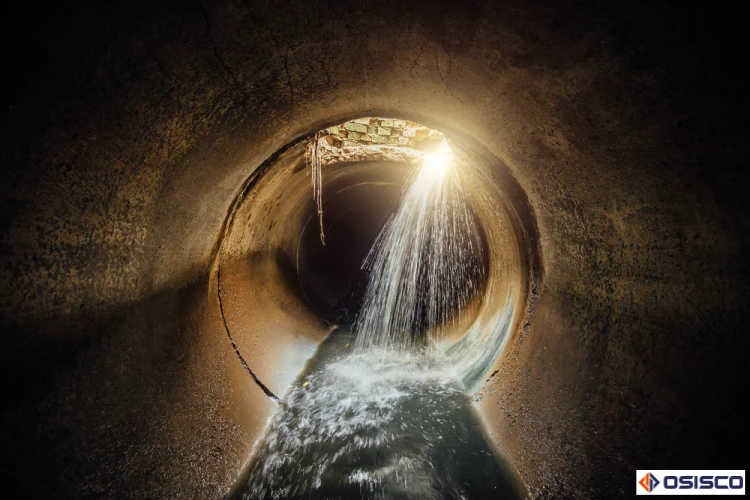
Tunnels and underground utility corridors are exposed to groundwater pressure, construction joint leakage, segment joint leakage, cracks, and voids behind the lining.
Injection methods used in tunnels may include PU injection, acrylic injection, curtain injection, microfine cement injection, ground stabilization injection, and crack or joint injection.
Underground Car Park Leakage
Underground car parks often suffer from leakage through retaining walls, slabs, construction joints, and expansion joints. Water ingress can damage coatings, affect concrete durability, create safety issues, and delay handover.
Industrial and Infrastructure Structures
Concrete injection is also used in power plants, industrial facilities, water tanks sewage structures, wastewater treatment plants, bridges, pump stations, reservoirs, utility tunnels, and infrastructure concrete structures.
How Engineers Select the Correct Injection System
The correct injection system should be selected after answering the following questions:
- Is the leak active or dry?
- Is the water pressure low, medium, or high?
- Is the crack moving or stable?
- Is the crack structural or non-structural?
- Is the objective waterproofing, structural repair, or both?
- Is the leakage coming from a crack, joint, penetration, honeycomb, or failed membrane?
- Is external access possible?
- Is the structure underground or water-retaining?
- Is the area exposed to chemicals, sewage, or potable water?
- Is movement expected after repair?
- What documentation does the consultant require?
| Site Condition | Common Injection Option | Typical Objective |
|---|---|---|
| Active water leakage | PU injection | Stop or control live water leakage |
| Fine cracks, joints, curtain injection, membrane repair | Acrylic / polyacrylic injection | Permanent watertight sealing and deep penetration |
| Dry structural cracks | Epoxy injection | Structural bonding and crack repair |
| Voids, soil stabilization, rigid filling | Microfine cement or cementitious grout | Void filling and ground improvement |
| Leakage from behind the structure | Curtain injection | Create a waterproof barrier behind concrete |
OSISCO Injection Method Statement
Every injection project should follow a controlled method statement.
1. Site Inspection
OSISCO inspects the leakage area, identifies the visible symptoms, checks the structure type, and studies the possible water paths.
2. Leak Mapping
Leak locations are marked and classified according to type: crack, joint, penetration, honeycomb, seepage zone, or active water flow.
3. Diagnosis
The team determines whether the problem requires PU injection, acrylic injection, epoxy injection, curtain injection, microfine cement injection, or a combined system.
4. Material Selection
The material is selected based on crack width, water pressure, movement, substrate condition, required flexibility, and project specification.
5. Drilling
Injection holes are drilled at the correct spacing, depth, and angle to intersect the crack, joint, void, or target injection zone.
6. Packer Installation
Mechanical packers or surface packers are installed and tightened to allow controlled injection.
7. Flushing or Pre-Testing
Where required, water flushing or pressure testing is carried out to confirm connectivity and prepare the injection path.
8. Injection
The selected resin or grout is injected under controlled pressure. Injection continues until the material fills the leakage path and reaches adjacent packers or the leak is sealed.
9. Monitoring
The area is monitored during and after reaction to confirm leakage reduction or complete sealing.
10. Finishing
Packers are removed, drilled holes are patched, and the surface is repaired.
11. QA/QC Documentation
A professional injection report may include:
- Site photos
- Leak mapping
- Injection point layout
- Product data sheets
- Safety data sheets
- Batch numbers
- Injection pressure records
- Material consumption records
- Before and after photos
- Final inspection notes
Quality Control for Injection Grouting
For consultant approval and long-term performance, injection work should be controlled as a specialized repair system.
Important QA/QC requirements include:
- Approved method statement
- Approved material submittal
- Correct product data sheet
- Trained applicators
- Correct mixing ratio
- Suitable injection pump
- Correct packer spacing
- Controlled pressure
- Site safety measures
- Material batch records
- Inspection and handover report
International standards and project specifications may also apply depending on the structure type, client, and consultant requirements. For structural repair injection, EN 1504-5 is commonly referenced for repair and injection concrete products and systems.
Why Choose OSISCO?
OSISCO is a specialized engineering and contracting company focused on technically demanding construction solutions, including Injection Systems, Waterproofing Systems, Concrete Repair, Protective Coatings, Industrial Flooring, Fire Protection, and Fire Stopping.
OSISCO’s injection services include:
- Crack injection
- Curtain injection
- PU injection
- Acrylic injection
- Epoxy injection
- Water inrush control
- Soil stabilization
- Injection hose systems
- Slab lifting
- Underground waterproofing
- Water leak repair
- Concrete repair injection
Engineering-Based Diagnosis
OSISCO does not treat every leak with the same product. The team studies the source of leakage, water pressure, crack condition, movement, and structure type before selecting the injection system.
Suitable for Critical Structures
OSISCO injection systems are suitable for real estate developments, industrial buildings, underground car parks, bridges, potable water structures, sewerage structures, tunnels, hydraulic structures, excavation pits, and foundation soil.
Multiple Injection Technologies
OSISCO works with different injection technologies including polyurethane resin, acrylic/polyacrylic resin, epoxy resin, microfine cement, and pressure grouting systems.
Professional Documentation
For projects requiring consultant approval, OSISCO can support the work with method statements, technical submittals, inspection records, product data sheets, and QA/QC reports.
Saudi Arabia Coverage
OSISCO supports projects across Saudi Arabia, including Riyadh, Jeddah, Dammam, and other industrial, commercial, and infrastructure areas.
Search Terms Engineers Use for This Service
This page is designed to support search visibility for the following engineering and contractor search terms:
- Concrete Injection Saudi Arabia
- Sika injection
- Sika injection Saudi Arabia
- Crack injection
- Crack injection Saudi Arabia
- PU injection
- PU injection Saudi Arabia
- Polyurethane injection
- Water leak repair Saudi Arabia
- Injection grouting Saudi Arabia
- Curtain injection Saudi Arabia
- Waterproofing injection
- Concrete crack repair
- Basement leak repair
- Basement waterproofing Saudi Arabia
- Lift pit waterproofing
- Lift pit leakage repair
- Water tank leakage repair
- Underground waterproofing Saudi Arabia
- Construction joint leakage repair
- Expansion joint leakage repair
- Sika Injection 304
- Sika Injection 306
- Sika Injection 307
- Injection contractor Saudi Arabia
- Waterproofing contractor Saudi Arabia
+6++Frequently Asked Questions
What is the best injection system for active water leakage?
For active water leakage, PU injection is commonly used because polyurethane systems can react with water and seal cracks, joints, and voids. In some cases, acrylic or polyacrylic injection may be selected depending on water pressure, crack size, and the required repair objective.
What is the difference between PU injection and epoxy injection?
PU injection is mainly used for water leak repair and flexible waterproofing. Epoxy injection is mainly used for structural crack bonding when the crack is dry or the water has been controlled.
Are Sika Injection 304, 306, and 307 PU products?
No. Sika Inject 304 DE, Sika Injection 306, and Sika Injection 307 are polyacrylic or acrylate-based injection systems used for permanent watertight sealing and related applications. PU injection systems are different products.
When is curtain injection used?
Curtain injection is used when water is entering from behind the structure and external excavation is not possible. It creates a waterproof barrier behind the concrete wall or slab.
Can injection stop basement water leakage?
Yes. Injection is commonly used for basement leak repair, especially for cracks, joints, tie-rod holes, pipe penetrations, and failed external waterproofing zones.
Can injection be used in lift pits?
Yes. Lift pit waterproofing is one of the most common injection applications because external access is usually impossible after construction.
Is injection suitable for water tanks?
Yes. Injection can be used for water tank leakage repair, including cracks, construction joints, pipe penetrations, honeycomb zones, and floor-wall joints. Material selection must follow the project specification and water-use requirements.
Why does concrete injection fail sometimes?
Injection may fail if the leak source is incorrectly diagnosed, the wrong material is selected, packer spacing is poor, injection pressure is uncontrolled, or the repair is performed without proper preparation and QA/QC.
How can engineers know the correct injection system?
The correct system should be selected after inspection, leak mapping, crack assessment, water pressure evaluation, and review of the project specification. OSISCO can support engineers with site assessment and technical recommendations.
If your project has water leakage, concrete cracks, basement seepage, lift pit leakage, tunnel leakage, water tank leakage, construction joint leakage, expansion joint leakage, or requires dependable Saudi Arabia waterproofing services, OSISCO can inspect the site and recommend the correct injection system.
OSISCO provides Concrete Injection Saudi Arabia services, including PU injection, Sika injection, crack injection, curtain injection, acrylic injection, epoxy injection, injection grouting, and water leak repair services for projects across Saudi Arabia.
For engineers, consultants, contractors, developers, and facility managers, OSISCO delivers injection solutions based on proper diagnosis, suitable material selection, professional execution, and documented QA/QC.
Contact OSISCO for Concrete Injection Saudi Arabia
If your project has water leakage, concrete cracks, basement seepage, lift pit leakage, tunnel leakage, water tank leakage, construction joint leakage, expansion joint leakage, or underground waterproofing failure, OSISCO can inspect the site and recommend the correct injection system.
OSISCO provides Concrete Injection Saudi Arabia services, including PU injection, Sika injection, crack injection, curtain injection, acrylic injection, epoxy injection, injection grouting, and water leak repair services for projects across Saudi Arabia.
For engineers, consultants, contractors, developers, and facility managers, OSISCO delivers injection solutions based on proper diagnosis, suitable material selection, professional execution, and documented QA/QC.
Protect what you build with OSISCO.
Need Expert Help?
Our engineers respond within 24 hours. Free site assessment included.
Request Assessment →